
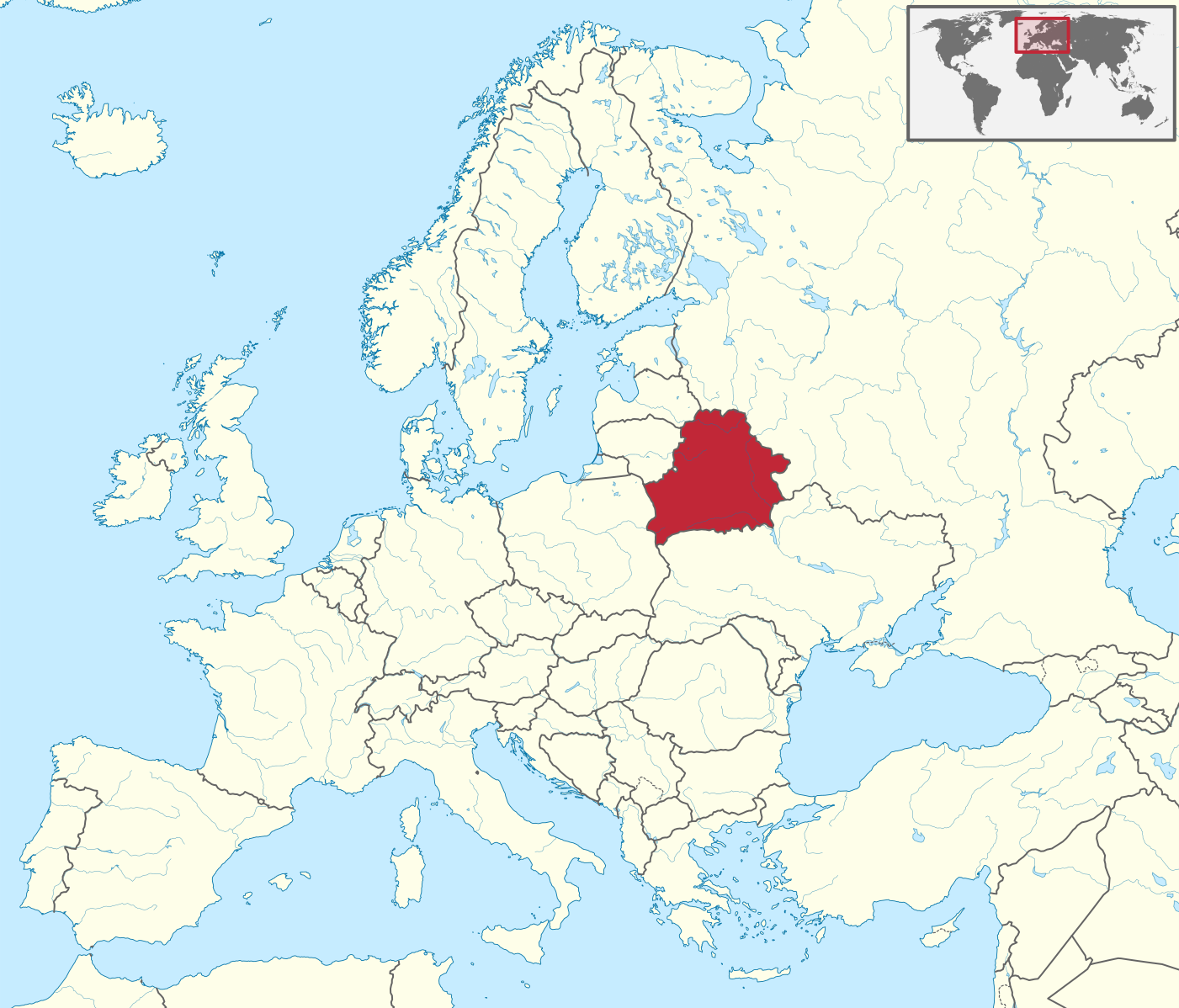
Located in Northeastern Europe, bordered by Russia, Ukraine, Poland, Lithuania and Latvia, Belarus is a landlocked country at the crossroads of Slavic cultures. With an area of 207,600 km² and a population of around 9.2 million inhabitants, its capital city, Minsk, lies at the heart of the nation and serves as its political, cultural and economic center. Belarus features mostly flat terrain, with over 40% of its surface covered by forests, lakes, and lowland plains. The temperate continental climate brings cold winters and warm summers, with considerable seasonal variations in temperature. The territory’s natural resources include peat, forests, and fertile soils, while its rivers, such as the Dnieper and the Pripyat, form crucial inland waterways. Once part of the Soviet Union, Belarus retains a unique blend of Soviet-era influences, Orthodox traditions, and Baltic cultural features. While structured and lesser-known, a travel to Belarus offers insight into a society balancing modernization with heritage. This territory stands out for its architectural contrasts, vast wilderness, and preserved folklore, making it a distinctive destination apart from mainstream European circuit.
Geographic map – Belarus
What to do in Belarus? Main activities and attractions
The capital city Minsk impresses with Stalinist architecture and vibrant cultural institutions like the National Art Museum and Bolshoi Opera and Ballet Theatre. In Brest, don’t miss the iconic Brest Hero-Fortress commemorating the WWII defense. The medieval castle complex of Mir (UNESCO World Heritage Site) and the neo-Gothic Nesvizh Castle reflect the grandeur of the Radziwill nobility. In Grodno, baroque churches and a strong Polish-Lithuanian legacy envelop the visitor. Belarusian Orthodox churches, Soviet mosaics, and local village museums contribute to a uniquely Slavic panorama often ignored by mainstream tourism.
Nature lovers can trek through the Belovezhskaya Pushcha National Park, Europe’s oldest primeval forest and home to wild bison. Lakes like Narach and rivers like Berezina open possibilities for boating, fishing, and eco-tourism. Winter offers cross-country skiing in Raubichi or Logoysk resorts. For local flavors, don’t miss draniki (potato pancakes), machanka (pork stew), and berry-infused kvass. Try a kolkhoz (collective farm) homestay or local dacha weekend in the countryside for immersive cultural exchanges. Belarus provides authentic, nature-infused experiences enhanced by traditions that remain deeply rooted and proudly upheld.
Climate in Belarus: average temperature table
| Data | Jan | Feb | Mar | Apr | May | Jun | Jul | Aug | Sep | Oct | Nov | Dec |
|---|---|---|---|---|---|---|---|---|---|---|---|---|
| Temperature (°C) | -5° | -4° | 2° | 10° | 17° | 21° | 23° | 22° | 16° | 9° | 2° | -2° |
| Precipitations | Low | Low | Medium | Medium | Medium | Medium | High | Medium | Medium | Medium | Medium | Low |
| Tourist attendance | Low | Low | Medium | Medium | High | High | High | Medium | Medium | Low | Low | Low |
← Swipe to see all months →
Temperatures shown are monthly averages.
Best period: Months with green background are the most favorable periods to visit Belarus.
Unusual and off-the-beaten-path experiences in Belarus
While many travel to Belarus for its capital and major castles, the country rewards those eager to explore beyond. The Stalin Line, located near Zaslavl, is an open-air military museum where visitors can drive tanks and test WWII weapons — a vivid, hands-on historical journey. For a bizarre glimpse into Cold War remnants, visit the Abandoned Vileyka Navy Radar Station in the Minsk region, once part of the Soviet “Duga” radar system. In the Mogilev region, the ethnocultural complex Dudutki offers a window into 19th-century Belarusian craftsmanship, with workshops, horse carriages and home-baked black bread. Should you venture north, Polotsk, the oldest city in Belarus, holds secret chapels, an underground crypt, and ancient manuscripts in its Saint Sophia Cathedral. Nature lovers will find the Blue Lakes of Braslav a mystical setting where fog lingers among pine forests and glacial lakes, perfect for kayaking, stargazing and isolation. Finally, in small villages like Uzda or Turov, you may encounter local stork nests, Orthodox wooden churches, and warm hospitality over homemade vodka. These experiences reveal layers of Belarus away from tourism brochures. Mixing unexpected history, wilderness and preserved folklore, they show why curiosity is richly rewarded across this lesser-known land.
When to visit Belarus? Best travel periods
What is the ideal time to visit Belarus?
The best period to visit Belarus is from May to September, when temperatures range between 20°C and 25°C and landscapes bloom with green forests and wildflowers. June to August offers the warmest and driest weather suited for outdoor activities and festivals. In May, Orthodox Easter and Victory Day bring vibrant public ceremonies. Autumn (September to early October) is excellent for scenic photography and forest walks, especially in the Braslav Lakes region. Winter travelers should prepare for harsh cold, as temperatures often drop below -5°C with snowy landscapes, especially appealing in ski resorts. Avoid travel in late March and early April when snowmelts cause muddy terrain and limited outdoor access. While Belarus does not observe Daylight Saving Time, daylight hours vary considerably by season. Cultural events, such as the Slavianski Bazaar in Vitebsk (July), enhance summer stays with concerts and folklore. Overall, summer remains the most comfortable and eventful season for all types of travel to Belarus.
Essential practical information for traveling to Belarus
📋 Formalities and visa
EU, UK, and US citizens can enter Belarus without a visa for up to 30 days via Minsk International Airport, as long as they do not arrive from or depart to Russia. A valid passport and proof of medical insurance are mandatory. Registration is required within 10 days of arrival, which hotels or online services typically handle.
🚗 Driving rules
Vehicles drive on the right side of the road. An international driving license is required for most foreign travelers. Road signs are often in Cyrillic, so a GPS or translation app is helpful. Alcohol tolerance when driving is effectively zero, and headlights must be turned on at all times.
🔌 Electricity
Belarus uses type C and F plugs with a standard voltage of 220V and frequency of 50Hz. Travelers from the UK or North America will need a European adapter.
📱 Mobile network and internet
Coverage is widespread across urban and rural areas. Major operators include A1, MTS, and life:), offering prepaid SIM cards at airports and kiosks. Prices for data packages are affordable, starting around €3 for several GB. Free Wi-Fi is common in hotels and cafes.
⚠️ Safety and areas to avoid
Belarus is relatively safe, but political demonstrations should be avoided, especially in Minsk. Some border areas require special permits, such as parts of the Brest Region. Traffic-related accidents can occur — use caution at night and in poor weather. Emergency numbers include 101 for fire, 102 for police, and 103 for medical services.
🚫 Prohibitions and regulations
Public criticism of authorities or political speech may result in fines or detention. Photography is forbidden of military sites, government buildings, or borders. Carrying drugs, even in small amounts, results in severe penalties. Declare all foreign currency over $10,000 USD at entry.
🤝 Cultural codes and behavior
Avoid loud behavior or overt displays of affection in public. Belarusians appreciate respectful politeness, formal greetings, and proper dress especially in churches or formal events. Handshakes are common, and punctuality is valued.
🕌 Respect for religious traditions
Eastern Orthodox Christianity is the dominant religion, followed by Catholic and Uniate minorities. When visiting churches and monasteries, dress modestly, avoid photography unless permitted, and remain silent during services. Easter and Christmas are widely observed.
Sources: Foreign Office, Embassy in Belarus, Belarus National Tourism Office. Last updated: January 2025
Time difference with Belarus
| City | Local time | Time in Minsk | Difference |
|---|---|---|---|
| 🇫🇷 Paris | 12:00 | 13:00 | +1h |
| 🇬🇧 London | 12:00 | 14:00 | +2h |
| 🇺🇸 New York | 12:00 | 19:00 | +7h |
| 🇦🇪 Dubai | 12:00 | 11:00 | -1h |
| 🇯🇵 Tokyo | 12:00 | 07:00 | -5h |
| 🇦🇺 Sydney | 12:00 | 05:00 | -7h |
💡 Good to know : Belarus is always ahead of most Western European countries and does not observe daylight saving time, so plan phone calls accordingly.