
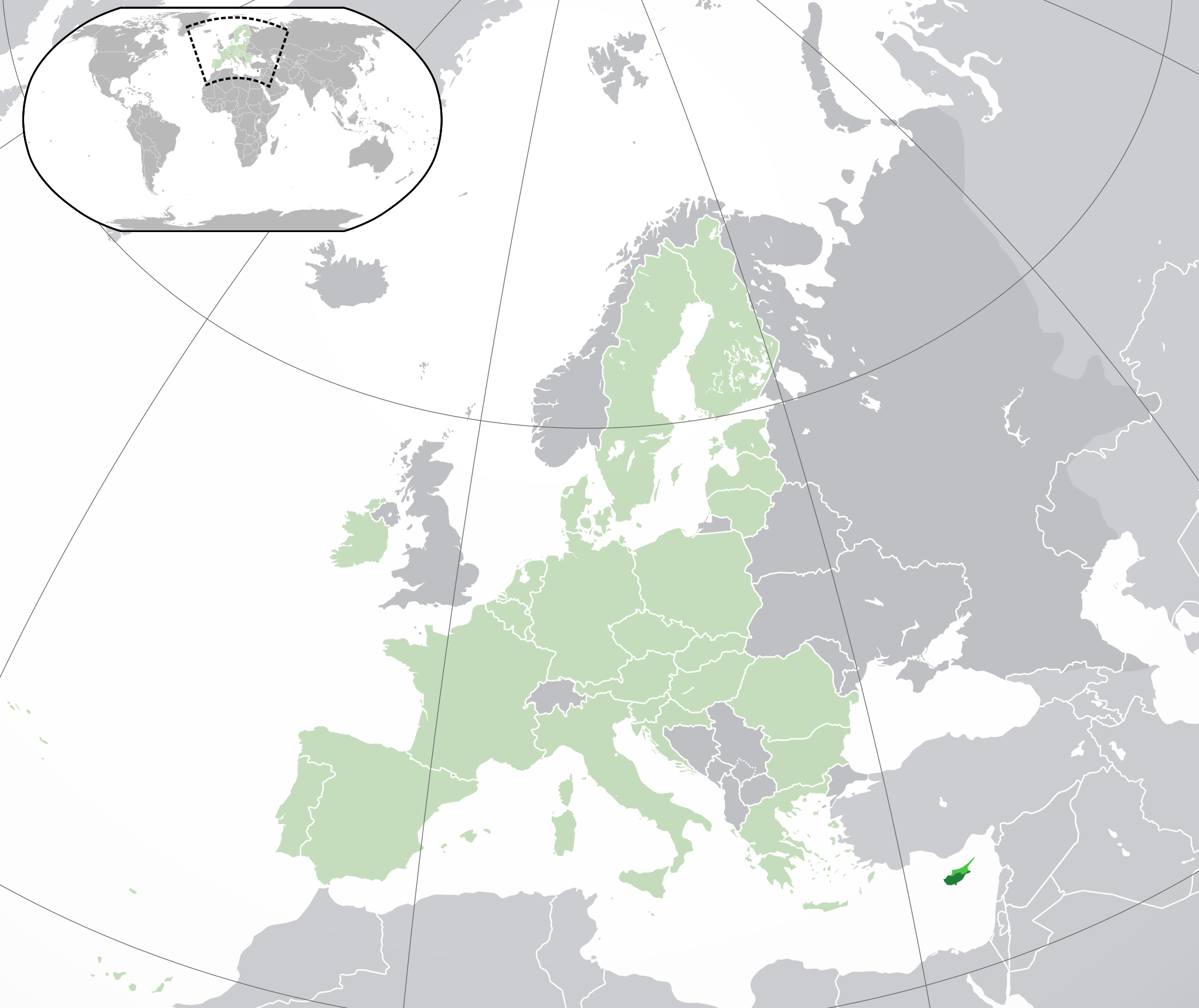
Located in the eastern Mediterranean, Cyprus lies at the crossroads of Europe, Asia, and Africa, south of Turkey and west of Syria and Lebanon. This makes the island a strategic hub, both historically and culturally. It covers an area of 9,251 km² and hosts around 1.2 million inhabitants. The capital, Nicosia, is the last divided capital in the world, with a northern and southern zone separated by a UN buffer zone. Cyprus’ terrain features rugged mountains such as the Troodos range, along with central plains and a long coastline of scenic shores. The island enjoys a subtropical Mediterranean climate, with hot, dry summers and mild winters. Its natural resources include copper (from which the island gets its name), natural gas, and fertile agricultural lands. Historically, Cyprus has been influenced by Greek, Roman, Byzantine, Ottoman, and British occupations, leading to a rich cultural mosaic. Greek and Turkish are the main languages, reflecting the division of the island. Travel to Cyprus offers a unique blend of European charm with Middle Eastern influences, archaeological landmarks, and culinary diversity that set it apart from other Mediterranean destinations.
Geographic map – Cyprus
What to do in Cyprus? Main activities and attractions
Cyprus is home to exceptional historical treasures reflecting centuries of civilizations. In the south, Kourion’s Greco-Roman ruins near Limassol showcase a well-preserved amphitheater with views of the Mediterranean. Paphos Archaeological Park, a UNESCO World Heritage site, offers spectacular mosaics and ancient villas. The medieval Castles of Kolossi and Saint Hilarion also transport visitors to the island’s crusading past. In the divided capital, Nicosia, a walk across the Green Line allows exploration of two different cultures within one city, offering a powerful and rare experience in modern Europe.
Nature lovers can hike through the pine forests of the Troodos Mountains, explore scenic waterfalls, or enjoy panoramic trails like the Artemis Loop. Beach enthusiasts will adore Nissi Beach in Ayia Napa and Fig Tree Bay in Protaras, perfect for swimming and water sports. Gastronomy is central to Cypriot life: don’t miss tasting meze menus, grilled halloumi cheese and fresh seafood. Wine enthusiasts can tour traditional mountain wineries producing famed Commandaria dessert wine. Combining nature, culture, and gastronomy makes any travel to Cyprus a well-rounded experience.
Climate in Cyprus: average temperature table
| Data | Jan | Feb | Mar | Apr | May | Jun | Jul | Aug | Sep | Oct | Nov | Dec |
|---|---|---|---|---|---|---|---|---|---|---|---|---|
| Temperature (°C) | 13° | 13° | 16° | 20° | 24° | 28° | 31° | 31° | 29° | 25° | 20° | 15° |
| Precipitations | Medium | Medium | Low | Low | Low | Low | Low | Low | Low | Low | Medium | Medium |
| Sea temp. (°C) | 17° | 17° | 18° | 19° | 22° | 25° | 27° | 28° | 27° | 25° | 22° | 19° |
| Tourist attendance | Low | Low | Medium | Medium | High | High | High | High | Medium | Medium | Low | Low |
← Swipe to see all months →
Temperatures shown are monthly averages.
Best period: Months with green background are the most favorable periods to visit Cyprus.
Unusual and off-the-beaten-path experiences in Cyprus
While famous beaches and ruins attract most visitors, Cyprus also offers unexpected experiences for those willing to explore. Start with Lefkara village in the Troodos foothills, celebrated for its lace embroidery and silverwork. In this timeless village, artisans still use techniques passed down through centuries. Then head to Fikardou, a semi-abandoned stone village nestled in the mountains, where restored houses from the 18th century host small museums and allow total immersion into rural life. For a natural surprise, explore the Avakas Gorge in the Akamas Peninsula, where a narrow limestone path winds between 30-meter high canyon walls, populated by wild flora. On the northern coast, Golden Beach in the Karpas Peninsula offers pristine sand and almost total solitude, ideal for travelers seeking silence. Another eccentric experience: explore the ghost town of Varosha in Famagusta, once a thriving seaside resort abandoned since 1974. Access is now partially reopened under Turkish Cypriot administration, offering a haunting glimpse of a frozen past. These lesser-known spots reveal Cyprus’ complex identity—where nature, history, and politics converge beyond the usual postcard image. Escape the mainstream and uncover a more authentic Cyprus.
When to visit Cyprus? Best travel periods
What is the ideal time to visit Cyprus?
The best months to travel to Cyprus are May, June, September, and October. These offer warm weather, sunny skies, and thinner crowds, perfect for sightseeing or beach activities. Summer months (July and August) are very hot, with inland temperatures exceeding 35°C, and often quite busy with tourists. In winter, temperatures remain mild along the coast, though some mountainous regions see snow—ideal for short ski trips. Regional variations are important: coastal areas are great nearly year-round, while the central plains can be scorching in summer. Avoid traveling during Orthodox Easter if you prefer calm atmospheres; however, it’s an incredible moment for cultural immersion. Events such as the Limassol Carnival (February–March) or Paphos Aphrodite Festival (September) offer festive alternatives that combine culture with seasonal charm.
Essential practical information for traveling to Cyprus
📋 Formalities and visa
EU citizens do not need a visa for stays under 90 days. Travelers must carry a valid passport or EU national ID card. UK and US citizens can also visit visa-free for up to 90 days, provided their passport is valid for the duration of stay. For longer stays or work permits, contact the Cyprus embassy in advance.
🚗 Driving rules
Cyprus drives on the left-hand side of the road. Road signage is in English and Greek. An international driving license is recommended if yours is not issued in the EU. Seatbelts are mandatory, and mobile phone use while driving is banned. Be cautious: local drivers can be fast and impulsive.
🔌 Electricity
Power plugs are Type G (UK-style sockets), with a voltage of 240V and frequency of 50Hz. Travelers from mainland Europe or the US will need an adapter.
📱 Mobile network and internet
Cyprus has excellent mobile and 4G coverage. Main operators include Cytamobile-Vodafone, Epic, and PrimeTel. European SIMs benefit from EU roaming. Locally, prepaid SIM cards are cheap and easy to buy—expect prices around €10 for 2GB of data.
⚠️ Safety and areas to avoid
Cyprus is considered very safe, with low crime rates. Still, beware of pickpockets in tourist areas. The UN buffer zone between North and South Cyprus should not be crossed at unofficial points. In case of emergency, dial 112 for police, fire, or ambulance services.
🚫 Prohibitions and regulations
Do not carry or import any Turkish Cypriot goods into the South, including alcohol and cigarettes. The possession of even small amounts of drugs is illegal. Smoking is banned in enclosed public spaces, and fines are strict.
🤝 Cultural codes and behavior
Greetings are warm and friendly, with expected politeness to elders. Dress modestly when visiting religious sites and avoid loud or confrontational behavior in public. Kissing cheeks is common among friends, but handshakes suffice in professional settings.
🕌 Respect for religious traditions
The majority of Cypriots are Greek Orthodox, while Turkish Cypriots are mostly Muslim. When visiting churches or mosques, dress respectfully and inquire before taking photos. Major religious holidays can affect opening hours and public transport.
Sources: Foreign Office, Embassy in Cyprus, Cyprus National Tourism Office. Last updated: January 2025
Time difference with Cyprus
| City | Local time | Time in Nicosia | Difference |
|---|---|---|---|
| 🇫🇷 Paris | 12:00 | 13:00 | +1h |
| 🇬🇧 London | 12:00 | 14:00 | +2h |
| 🇺🇸 New York | 12:00 | 19:00 | +7h |
| 🇦🇪 Dubai | 12:00 | 11:00 | -1h |
| 🇯🇵 Tokyo | 12:00 | 06:00 | -6h |
| 🇦🇺 Sydney | 12:00 | 04:00 | -8h |
💡 Good to know : Cyprus is one hour ahead of most Western European countries, so plan calls and travel times accordingly.