
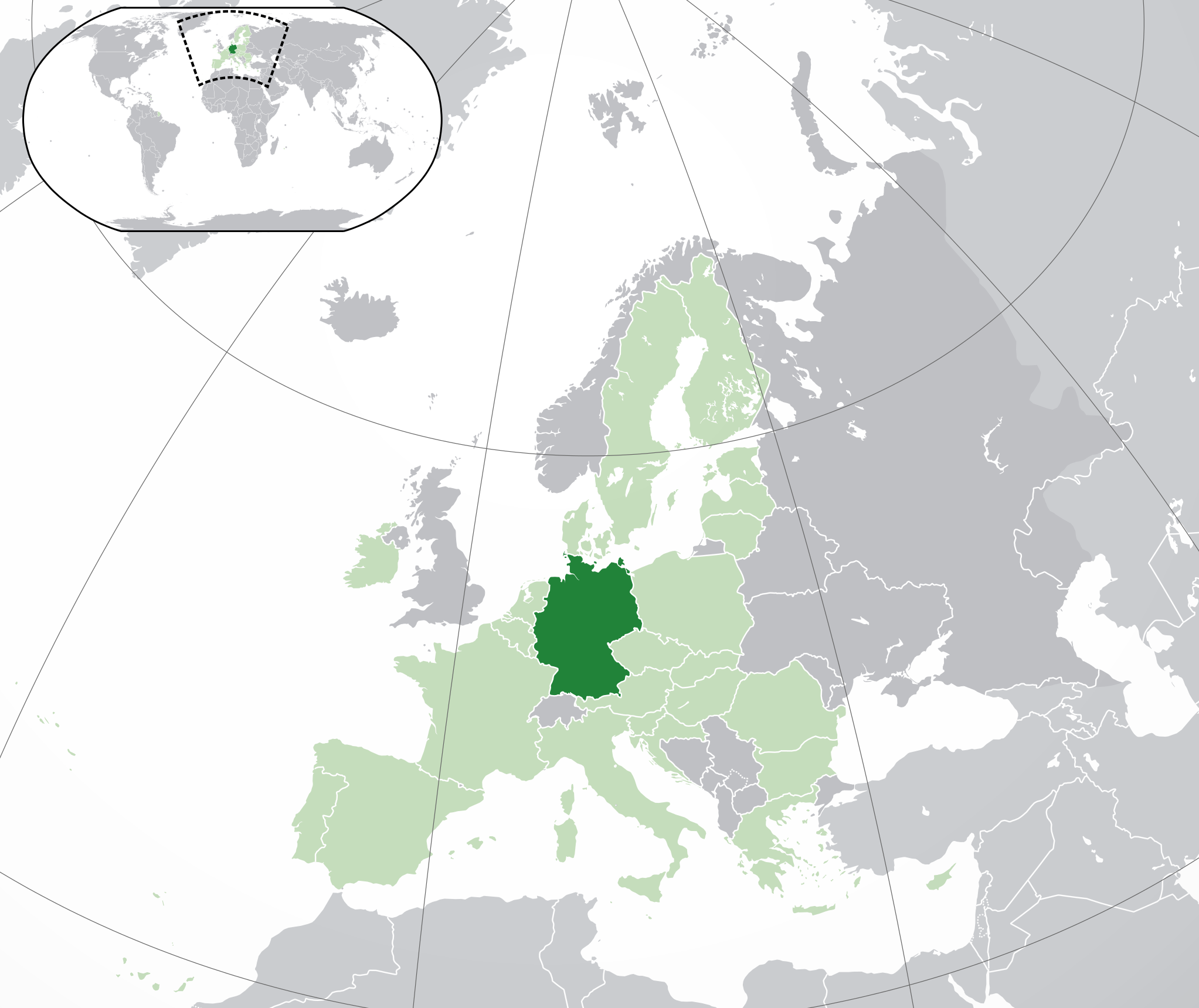
Located in Central Europe, bordered by nine countries including France, Poland, and Austria, Germany is a key player both economically and culturally in the region. It covers an area of 357,582 km² and is home to approximately 84 million people. Its capital city, Berlin, stands as a symbolic crossroads of past and future, blending historical monuments with modern infrastructure. Germany’s geography offers a wide variety of landscapes, from the alpine peaks of Bavaria to the flat plains of the north. The country experiences a temperate continental climate with cold winters and warm summers, influenced by both the Atlantic Ocean and eastern European airflows. Natural resources include coal, natural gas, and arable land, making Germany one of Europe’s industrial backbones. With a rich cultural heritage shaped by philosophers, composers, and thinkers, Germany is deeply rooted in history. From the Roman Empire and the Middle Ages to the World Wars and reunification, its historical journey is embedded across towns, castles, and museums. For those planning to travel to Germany, the country’s perfect blend of tradition and innovation, combined with regional diversity, sets it apart as a compelling and multifaceted territory worth exploring.
Geographic map – Germany
What to do in Germany? Main activities and attractions
Germany offers a rich tapestry of historical and cultural highlights for any visitor. Cities like Berlin, Munich, and Dresden boast world-class museums, architectural landmarks, and UNESCO World Heritage Sites. Notable sites include the Brandenburg Gate, Neuschwanstein Castle, and Cologne Cathedral. Germany is also deeply connected to music and philosophy; visitors can discover the homes of Beethoven, Bach, and Goethe. The scars and stories of World Wars are preserved at places like the Memorial to the Murdered Jews of Europe and the Berlin Wall. These sites present a respectful and profound way to explore the country’s complex past.
Nature seekers and gastronomy enthusiasts equally find joy in Germany. Hiking through the Black Forest or cycling along the Moselle Valley are ideal ways to connect with the country’s natural beauty. Meanwhile, sampling traditional dishes like bratwurst, Sauerbraten, and pretzels with a cold local beer offers cultural immersion through food. Don’t miss the Romantic Road drive dotted with medieval towns, or the chance to attend a summer wine festival in the Rhineland. With diverse experiences from sea to summit, Germany invites visitors to enjoy art, nature, and authenticity.
Climate in Germany: average temperature table
| Data | Jan | Feb | Mar | Apr | May | Jun | Jul | Aug | Sep | Oct | Nov | Dec |
|---|---|---|---|---|---|---|---|---|---|---|---|---|
| Temperature (°C) | -1° | 0° | 4° | 9° | 14° | 17° | 19° | 18° | 14° | 9° | 4° | 1° |
| Precipitations | Medium | Medium | Medium | Medium | Medium | Low | Low | Low | Medium | Medium | Medium | Medium |
| Tourist attendance | Low | Low | Medium | High | High | High | High | High | High | Medium | Low | Low |
← Swipe to see all months →
Temperatures shown are monthly averages.
Best period: Months with green background are the most favorable periods to visit Germany.
Unusual and off-the-beaten-path experiences in Germany
Germany isn’t just about castles and cathedrals—hidden across its landscapes are lesser-known yet fascinating experiences perfect for curious travelers. In Görlitz, a picturesque town on the Polish border, explore one of Germany’s best-preserved old towns and film locations for Hollywood productions. Its medieval alleys and squares transport visitors to another era. Nearby in Berlin, consider diving into urban nature at Tempelhofer Feld, a decommissioned airport turned into a massive public park. Locals bike along old runways while others picnic on the grass—an iconic symbol of reappropriated space. For something completely different, visit the Rakotzbrücke in Kromlau, known as the “Devil’s Bridge.” This perfectly symmetrical stone bridge creates a mirror circle in its reflection, offering a magical atmosphere in Saxony’s countryside. In the Harz Mountains lies Quedlinburg, a town with over 1,200 timber-framed buildings. Its cobblestone charm and low tourist numbers make it a secret gem. Finally, for underground intrigue, venture into the Merkers Adventure Mines, where you can explore massive salt caverns by truck and learn of their WWII history. These offbeat spots offer a new perspective on Germany beyond traditional routes and invite meaningful exploration for those ready to stray from the expected path.
When to visit Germany? Best travel periods
What is the ideal time to visit Germany?
The best time to visit Germany is typically between May and September, when temperatures are pleasant and outdoor festivals abound. Spring offers blooming parks and fewer crowds, making May and June ideal for cities and countryside exploration. July and August are warmer but bring higher tourist numbers, especially in southern and coastal regions. September brings milder weather and traditional events like Oktoberfest in Munich. Winter, while cold, offers magical Christmas markets and festive traditions in cities like Nuremberg and Cologne. However, January to March should be avoided if you’re not a fan of cold and grey skies. Mountain lovers may still favor these months for skiing. Regional differences matter: the north remains cooler and windier while the south enjoys slightly more sun year-round.
Essential practical information for traveling to Germany
📋 Formalities and visa
EU citizens do not need a visa for stays under 90 days. For citizens from the UK and USA, short tourist stays (up to 90 days) within a 180-day period are allowed without a visa. A passport valid for at least three months beyond your departure is required. A visa is necessary for longer stays, work, or study.
🚗 Driving rules
Germany drives on the right-hand side. An international driving license is recommended for non-EU visitors. Germany’s famous Autobahns have sections without speed limits, but within cities, limits are strictly enforced by cameras. Seatbelt use and zero-tolerance for drink-driving are mandatory.
🔌 Electricity
Germany uses type C and F plugs. Voltage is 230V and frequency is 50Hz. Travelers from North America and the UK will require plug adapters. Most electronics are compatible with dual voltage adapters.
📱 Mobile network and internet
Germany has excellent 4G/5G coverage in cities and good network in rural areas. Major operators include Deutsche Telekom, O2, and Vodafone. Prepaid SIM cards are widely available and affordable. Expect roughly €10–15 for 5GB data with calls and SMS.
⚠️ Safety and areas to avoid
Germany is generally very safe. Exercise caution in train stations at night in large cities. Petty theft can happen in tourist-heavy places like Berlin or Frankfurt. Emergency number is 112. Avoid political demonstrations and follow local advice during events.
🚫 Prohibitions and regulations
Recreational drugs are illegal and strictly controlled. Public alcohol consumption is legal but discouraged in certain areas. Smoking is banned in most indoor places. Respect quiet hours in residential areas, generally after 10 PM.
🤝 Cultural codes and behavior
Politeness and punctuality are highly valued. Use formal greetings and titles unless invited otherwise. Avoid speaking loudly in public. Dress codes are casual but respectful in restaurants. Inappropriate jokes or gestures may be frowned upon, especially in business settings.
🕌 Respect for religious traditions
Lutheran Protestantism and Roman Catholicism are the main religions. Religious services are open to all, though modest attire is expected in churches. Respect Sunday closures and silence in religious spaces. Major holidays include Easter, Christmas, and Pentecost.
Sources: Foreign Office, Embassy in Germany, Germany National Tourism Office. Last updated: January 2025
Time difference with Germany
| City | Local time | Time in Berlin | Difference |
|---|---|---|---|
| 🇫🇷 Paris | 12:00 | 12:00 | Same time |
| 🇬🇧 London | 12:00 | 13:00 | +1h |
| 🇺🇸 New York | 12:00 | 18:00 | +6h |
| 🇦🇪 Dubai | 12:00 | 10:00 | -2h |
| 🇯🇵 Tokyo | 12:00 | 5:00 | -7h |
| 🇦🇺 Sydney | 12:00 | 3:00 | -9h |
💡 Good to know : Germany shares the same time with most of Central Europe, making intra-European travel smooth and jetlag-free.