
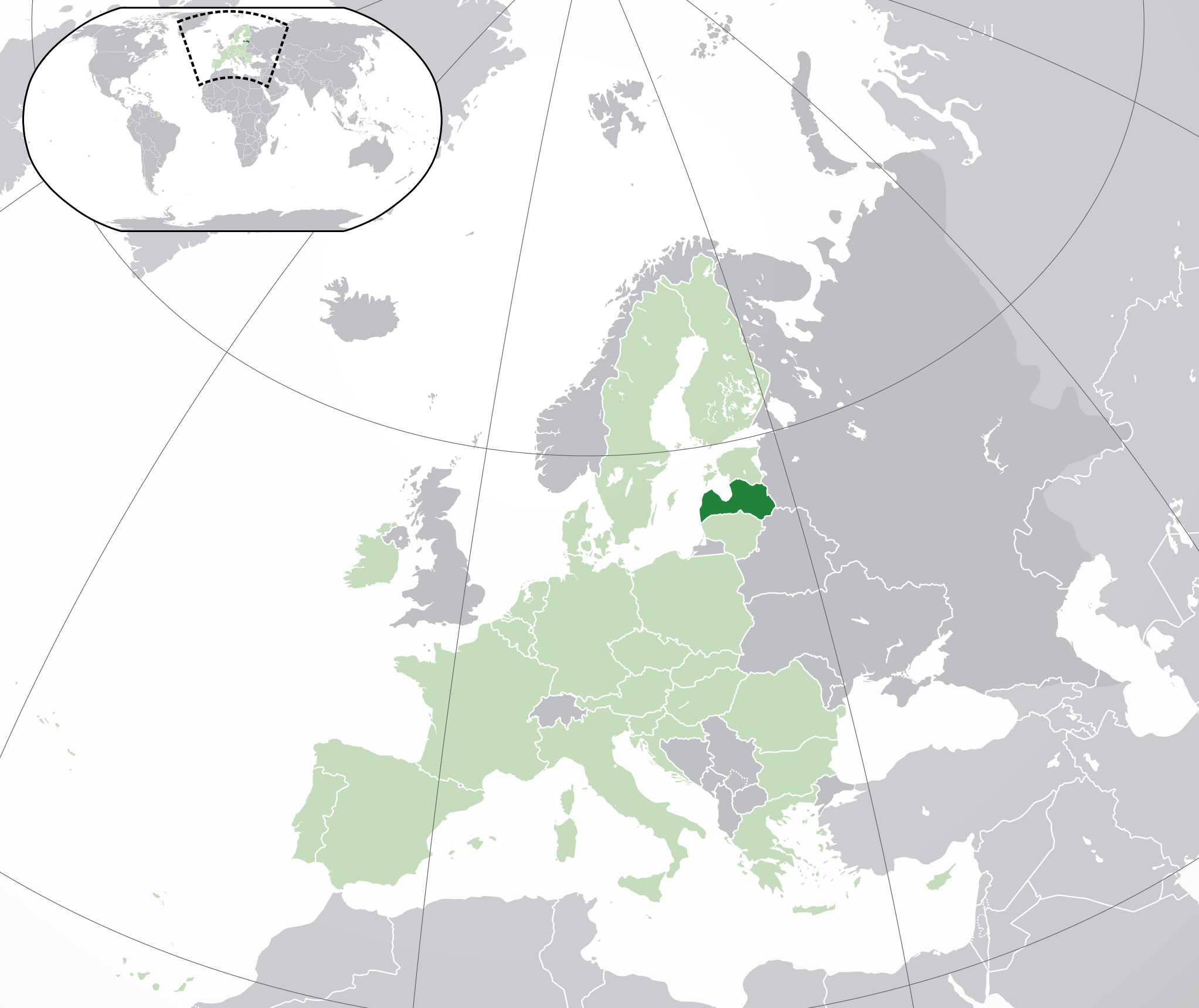
Located in Northeastern Europe, bordered by Estonia, Lithuania, Russia, and the Baltic Sea, Latvia sits at the intersection of western and eastern influences. This small yet diverse country covers an area of 64,589 km² and is home to approximately 1.8 million inhabitants. Its capital, Riga, is the largest city in the Baltics and a key cultural and economic hub. Latvia’s landscape is defined by vast forests, more than 3,000 lakes, sandy coastlines, and low-lying plains. With a temperate continental climate, Latvia experiences warm summers and cold, snowy winters. Natural resources such as amber, peat, and timber play a significant role in the economy and identity of this territory. Culturally, Latvia boasts a rich heritage influenced by Germanic, Swedish, and Soviet periods, which is reflected in its architecture, language, and customs. Visitors who travel to Latvia are captivated not only by its unspoiled nature and medieval towns, but also by a resilient national identity rooted in folk traditions and a vibrant choral culture. What sets this territory apart is its harmonious blend of natural serenity and storied past, making it a compelling yet often overlooked Baltic destination.
Geographic map – Latvia
What to do in Latvia? Main activities and attractions
Riga, the Latvian capital, is a must-see for history enthusiasts, with its UNESCO-listed Old Town, Art Nouveau buildings, and the iconic House of the Blackheads. The Rundāle Palace, a Baroque gem designed by the same architect as Russia’s Winter Palace, offers a glimpse into aristocratic life. Turaida Castle in Sigulda and the historic town of Kuldīga, with Europe’s widest waterfall, provide a deeper view into the country’s medieval past. The Latvian Ethnographic Open-Air Museum showcases the country’s rural traditions with reconstructed farmsteads and period furnishings.
Nature lovers can explore Gauja National Park, often dubbed the “Latvian Switzerland” for its sandstone cliffs and forested valleys, ideal for hiking, kayaking, and winter sports. The Kemeri Bog Boardwalk allows you to walk across a pristine bog ecosystem at sunrise. Latvia’s 500 km of undisturbed Baltic coastline invite visitors to relax on sandy beaches like those in Jurmala. The local cuisine blends hearty northern flavors; don’t miss grey peas with bacon or rye bread with honey beer. Farmers’ markets and food festivals offer the chance to taste authentic dishes in a lively setting.
Climate in Latvia: average temperature table
| Data | Jan | Feb | Mar | Apr | May | Jun | Jul | Aug | Sep | Oct | Nov | Dec |
|---|---|---|---|---|---|---|---|---|---|---|---|---|
| Temperature (°C) | -3° | -2° | 2° | 8° | 14° | 17° | 19° | 18° | 13° | 8° | 2° | -1° |
| Precipitations | Medium | Medium | Medium | Low | Low | Low | Low | Low | Low | Medium | Medium | Medium |
| Sea temp. (°C) | 2° | 2° | 4° | 7° | 11° | 15° | 18° | 18° | 16° | 12° | 8° | 4° |
| Tourist attendance | Low | Low | Low | Medium | High | High | High | High | Medium | Medium | Low | Low |
← Swipe to see all months →
Temperatures shown are monthly averages.
Best period: Months with green background are the most favorable periods to visit Latvia.
Unusual and off-the-beaten-path experiences in Latvia
While Latvia offers plenty of widely known attractions, stepping off the tourist trail reveals unique and lesser-known gems across the country. One such place is the village of Pape, located in the southwest, where visitors can witness wild horses and bison in a natural habitat within the Pape Nature Park. It’s a haven for bird watchers during migration seasons. In Eastern Latvia, near Ludza, Lake Razna and its surrounding Latgalian villages offer authentic encounters with local craftspeople. Pottery workshops invite travelers to shape traditional ceramics, while traditional singing evenings provide cultural immersion. Another hidden wonder is The Secret Soviet Bunker in Ligatne, a massive underground facility buried under a rehabilitation center. This Cold War relic offers guided tours delving into Soviet-era secrecy. History buffs will enjoy exploring abandoned military towns such as Skrunda-1, once a secret radar city, now a ghost town open for guided visits. For a quirky experience, visit The World of Hat Museum in Riga, showcasing hundreds of headpieces from around the globe. These offbeat spots highlight Latvia’s layered identity and encourage exploration beyond typical circuits. Travelers who embrace these unusual destinations uncover a deeper dimension of Latvia’s history, creativity, and ecological diversity.
When to visit Latvia? Best travel periods
What is the ideal time to visit Latvia?
The best time to travel to Latvia is between May and September, when temperatures are mild and daylight lasts up to 18 hours. Summer months, particularly July and August, offer comfortable weather averaging 19°C and coincide with cultural festivals like the Latvian Song and Dance Festival (held every five years) and Jāņi, the Midsummer celebration. The coastal towns and national parks are especially pleasant during this time. Early spring and late autumn can be chilly and gray, with fewer activities available, while winter brings snowfall ideal for cross-country skiing but also shorter, darker days. Those interested in Christmas markets and traditional fare may enjoy December in Riga. Avoid the wettest months of March and November, as they typically bring rain and muddy conditions in rural areas. Regional weather does not differ significantly across the small country, making planning easier across various destinations.
Essential practical information for traveling to Latvia
📋 Formalities and visa
EU citizens, as well as travelers from the UK and the US, do not need a visa for stays up to 90 days in Latvia within any 180-day period. Visitors must hold a valid passport or identity card (for EU citizens) with at least 3 months validity beyond departure. Proof of onward travel and accommodation may be requested at the border.
🚗 Driving rules
Driving is on the right-hand side in Latvia. An EU driving license is valid, while non-EU travelers must carry an international driving permit. Headlights must be used at all times and winter tires are mandatory from December 1 to March 1. Roads can be icy outside major cities in colder months.
🔌 Electricity
Standard European Type F sockets (two round pins) are used, at a voltage of 230V and a frequency of 50 Hz. Travelers from countries using other socket types will need an adapter.
📱 Mobile network and internet
Mobile coverage is excellent nationwide, including in rural areas. The main providers are LMT, Tele2, and Bite. Prepaid SIM cards are widely available and affordable at kiosks and supermarkets. 5G is active in major cities and most hotels offer free Wi-Fi.
⚠️ Safety and areas to avoid
Latvia is generally a safe country with low crime rates. Petty theft may occur in busy tourist areas, particularly in Riga. Always remain vigilant and avoid poorly lit parks at night. The emergency number is 112 for police, ambulance, and fire services.
🚫 Prohibitions and regulations
Public drinking is prohibited outside of licensed areas. Drugs are strictly illegal. Customs limits apply to tobacco and alcohol when arriving from non-EU countries. Drones must be registered and are restricted near airports and military zones.
🤝 Cultural codes and behavior
Latvians tend to be reserved and polite. Remove shoes when entering a home and address people formally unless invited otherwise. Public displays of emotion are limited, and punctuality is appreciated. Casual attire is generally accepted, but neatness is valued in urban areas.
🕌 Respect for religious traditions
Lutheranism, Catholicism, and Orthodoxy are the main religions. Most places of worship are open to visitors, but dress modestly and speak quietly. Religious holidays like Easter and Christmas are important family events; some services may close during these days.
Sources: Foreign Office, Embassy in Latvia, Latvia National Tourism Office. Last updated: January 2025
Time difference with Latvia
| City | Local time | Time in Riga | Difference |
|---|---|---|---|
| 🇫🇷 Paris | 12:00 | 13:00 | +1h |
| 🇬🇧 London | 12:00 | 14:00 | +2h |
| 🇺🇸 New York | 12:00 | 19:00 | +7h |
| 🇦🇪 Dubai | 12:00 | 10:00 | -2h |
| 🇯🇵 Tokyo | 12:00 | 6:00 | -6h |
| 🇦🇺 Sydney | 12:00 | 4:00 | -8h |
💡 Good to know : Latvia is usually 1 hour ahead of Paris and 2 hours ahead of London. Plan meetings accordingly when traveling for business.