
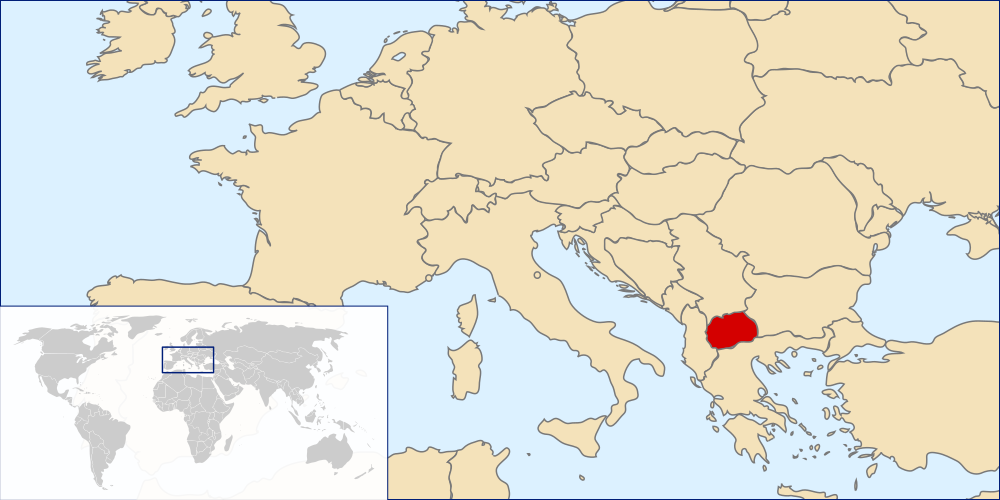
Located in the heart of the Balkan Peninsula, North Macedonia is bordered by Kosovo, Serbia, Bulgaria, Greece, and Albania. This landlocked country covers an area of approximately 25,713 km² and is home to around 2 million people. Its capital, Skopje, is the political, cultural, and economic hub and reflects a blend of Ottoman, Byzantine, and modern influences. North Macedonia presents a mountainous terrain with deep basins and valleys, including the Šar and Osogovo mountain ranges. The country enjoys a temperate continental climate, with hot summers and cold winters, particularly in inland regions. While it has modest natural resources, the territory is rich in lakes and rivers, notably Lake Ohrid, one of Europe’s deepest and oldest lakes, and a UNESCO World Heritage site. Historically, its strategic location has attracted various civilizations, from the ancient kingdom of Paeonia to the Roman and Ottoman Empires. The cultural heritage is visible through monuments, monasteries, and fortresses scattered across the territory. Today, a travel to North Macedonia offers a unique mix of Balkan traditions, vibrant local markets, and evolving cityscapes. What distinguishes the country is its authenticity, relatively low tourist density, and preserved natural beauty, making it a rewarding destination for curious travelers.
Geographic map – North Macedonia
What to do in North Macedonia? Main activities and attractions
The capital Skopje offers a striking contrast of architectural styles, from the Ottoman Old Bazaar to the neoclassical facades of Macedonia Square. Ohrid is a must-see, with its medieval churches, hilltop fortress, and charming lakeside promenade, earning it UNESCO recognition. History lovers should visit Heraclea Lyncestis near Bitola, an ancient Macedonian city with preserved Roman mosaics. The Monastery of Saint Naum, located on the Albanian border, offers spiritual serenity and scenic surroundings. In the north, Kratovo impresses with stone bridges and medieval towers, remnants of its rich medieval mining past.
Nature plays a central role during a travel to North Macedonia. Mavrovo National Park is ideal for hiking and skiing, surrounded by dense forests and alpine meadows. Pelister National Park near Bitola offers panoramic treks and unique flora like the Macedonian pine. Water lovers can kayak or boat on Lake Prespa or hike beside Kozjak Lake and Matka Canyon, a hotspot for outdoor enthusiasts. Culinary experiences abound—taste local dishes like tavče gravče or ajvar, and sample Tikveš region wines. Both rustic village meals and urban cafés deliver an authentic flavor of daily life.
Climate in North Macedonia: average temperature table
| Data | Jan | Feb | Mar | Apr | May | Jun | Jul | Aug | Sep | Oct | Nov | Dec |
|---|---|---|---|---|---|---|---|---|---|---|---|---|
| Temperature (°C) | 2° | 4° | 9° | 14° | 19° | 23° | 26° | 26° | 21° | 15° | 8° | 3° |
| Precipitations | Medium | Low | Medium | Medium | Low | Low | Low | Low | Medium | Medium | Medium | Medium |
| Tourist attendance | Low | Low | Medium | Medium | High | High | High | High | Medium | Medium | Low | Low |
← Swipe to see all months →
Temperatures shown are monthly averages.
Best period: Months with green background are the most favorable periods to visit North Macedonia.
Unusual and off-the-beaten-path experiences in North Macedonia
While tourist favorites like Ohrid and Skopje steal the spotlight, North Macedonia also offers many under-the-radar experiences worth seeking out. These lesser-known gems provide a more intimate connection to the land and its people.
In the eastern region, the village of Berovo near the Maleševo Mountains offers peaceful rural tourism. Here, travelers can stay in traditional guesthouses, eat homemade organic fare, and explore quiet pine forests. Along the southern border, Doiran Lake remains overlooked despite its serene beaches and birdwatching hotspots. Unlike the crowded Ohrid, it rewards those seeking stillness and solitude.
For a unique cultural immersion, visit Galičnik village during the annual Galičnik Wedding Festival in July, where traditional music, costumes, and customs are celebrated in a scenic mountainous setting. In the west, explore the mystic caves of Slatinski Izvori near Demir Hisar, accessible via short hikes and filled with underground streams and legends.
Fans of quirky attractions will appreciate Kuklica “Stone Dolls” geologic formations, near Kratovo—a natural site shaped by erosion that bears a striking resemblance to human silhouettes. Venturing beyond the typical trail unveils the depth of Macedonian culture and opens the door to authentic, unexpected discoveries in forgotten corners of the Balkans.
When to visit North Macedonia? Best travel periods
What is the ideal time to visit North Macedonia?
The best time to visit North Macedonia is between May and September, when the weather is warm and dry, ideal for outdoor exploring and cultural sightseeing. Spring (May–June) offers lush landscapes and moderate temperatures, perfect for hiking and national parks. July and August are the warmest, with temperatures reaching 30°C, especially suitable for lakeside vacations in Ohrid and Prespa. September is an excellent month with fewer tourists and grape harvest festivals in the Tikveš wine region.
Winter (December–February) can be cold but transforms areas like Mavrovo into ski destinations. Autumn (October–November) is calm and colorful but marked by variable weather. Avoid late autumn if you’re not into cloudy days and shorter daylight. Major events like the Ohrid Summer Festival (July-August) and Skopje Jazz Festival (October) can enhance your trip. Climatic variations exist between lowlands and highlands, so layer appropriately when planning your travel to North Macedonia.
Essential practical information for traveling to North Macedonia
📋 Formalities and visa
EU, UK, and US citizens do not need a visa for stays under 90 days within a 6-month period. A valid passport or national ID for EU nationals is required. Check validity of your documents before departure.
🚗 Driving rules
Driving is on the right side of the road. An international driving license is recommended, though EU licenses are accepted. Local traffic signs may differ and defensive driving is advised, especially in rural areas or mountainous zones.
🔌 Electricity
North Macedonia uses type C and F plugs with 230V voltage. No adapter is needed for most European travelers, but UK travelers will require a plug adapter. Frequency is standard at 50Hz.
📱 Mobile network and internet
Coverage is reliable in urban areas and along major roads. Main operators include A1 and Makedonski Telekom. Prepaid SIM cards are affordable and widely available. Expect decent 4G speeds; roaming charges apply outside the EU.
⚠️ Safety and areas to avoid
Generally safe with low crime levels. Take regular precautions in tourist hotspots. Avoid border areas not designated for crossing. Emergency numbers: 112 (general), 192 (police), 194 (ambulance).
🚫 Prohibitions and regulations
It is illegal to photograph military or police buildings. Drug possession leads to strict penalties. Declare valuables like drones at the border. Respect rules in protected natural sites.
🤝 Cultural codes and behavior
A handshake is the common greeting. Avoid pointing with your finger or discussing political issues like the name dispute. Dress modestly when visiting villages or religious sites. Public displays of affection are acceptable in cities.
🕌 Respect for religious traditions
Major religions include Orthodox Christianity and Islam. Visiting churches and mosques requires respectful clothing (covered shoulders/knees). Respect prayer times and avoid loud behavior during services. Ramadan may affect business hours in Muslim-majority towns.
Sources: Foreign Office, Embassy in North Macedonia, North Macedonia National Tourism Office. Last updated: January 2025
Time difference with North Macedonia
| City | Local time | Time in Skopje | Difference |
|---|---|---|---|
| 🇫🇷 Paris | 12:00 | 12:00 | Same time |
| 🇬🇧 London | 12:00 | 13:00 | +1h |
| 🇺🇸 New York | 12:00 | 18:00 | +6h |
| 🇦🇪 Dubai | 12:00 | 10:00 | -2h |
| 🇯🇵 Tokyo | 12:00 | 05:00 | -7h |
| 🇦🇺 Sydney | 12:00 | 03:00 | -9h |
💡 Good to know : Central European countries share the same time as Skopje, so no adjustment is needed for EU travelers during most of the year.