
Located in the North Atlantic, Iceland is an island nation situated just below the Arctic Circle between Greenland and mainland Europe. It belongs geographically to Northern Europe and is part of the Nordic countries. Covering approximately 103,000 km² and home to around 375,000 people, Iceland’s capital, Reykjavik, is also its cultural and economic hub. The terrain is largely composed of volcanic landscapes, glaciers, lava fields, and geothermal springs. The country enjoys a subarctic and oceanic climate, with relatively mild winters and cool summers due to the Gulf Stream. Natural resources such as geothermal energy and freshwater play a key role in its development. The island’s dramatic geological activity is a defining feature, offering a unique combination of fire and ice. Iceland’s cultural roots reach back to Norse settlers in the 9th century, and the Icelandic language remains closely tied to Old Norse. The country became independent from Denmark in 1944. Today, it’s known for its strong literary heritage, sustainable energy practices, and distinct folklore. What sets a travel to Iceland apart is this rare blend of pristine nature, historical isolation, and progressive society, making it a captivating destination in the northern hemisphere.
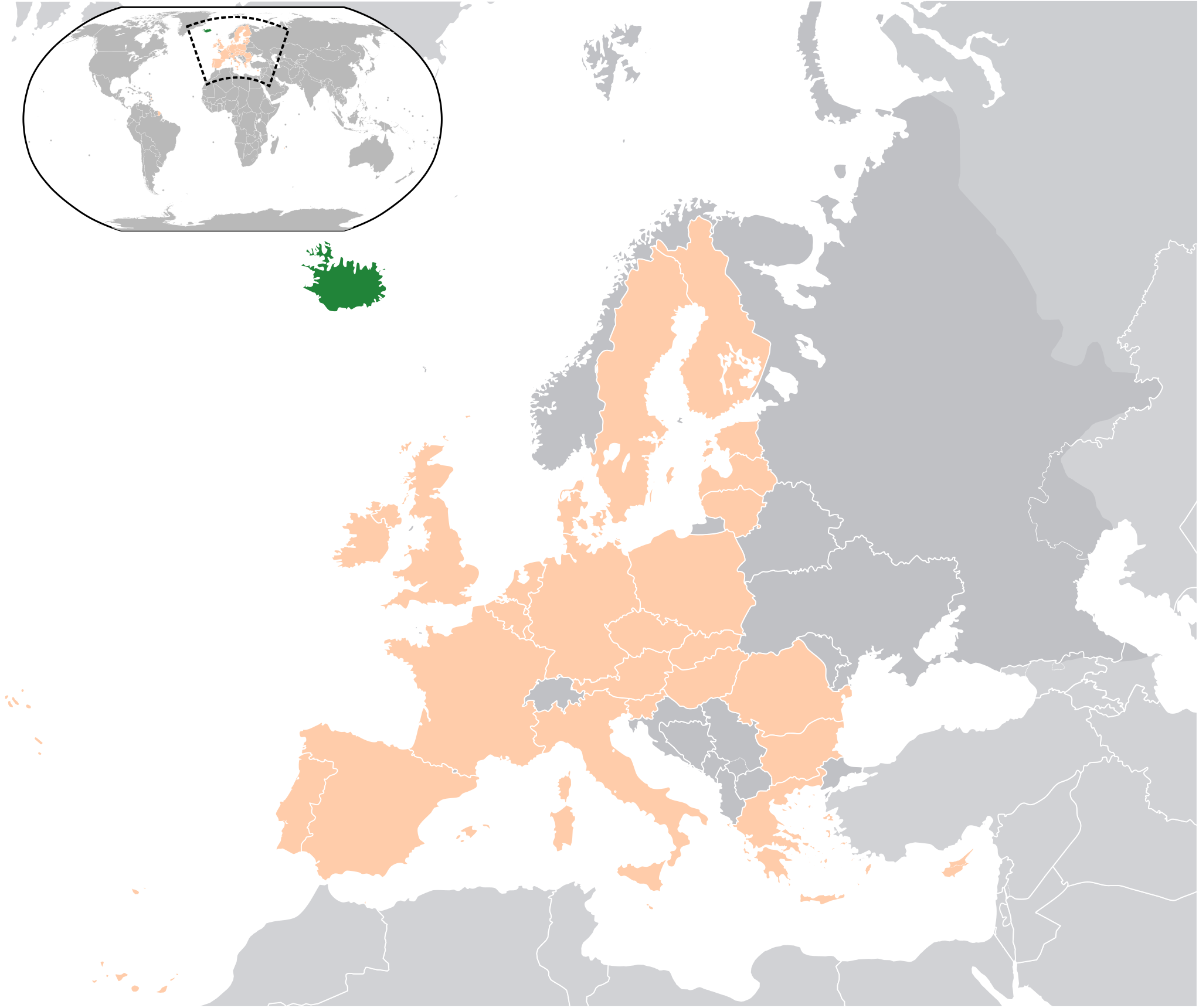
Geographic map – Iceland
What to do in Iceland? Main activities and attractions
Iceland offers a rich tapestry of cultural and historical landmarks for curious travelers. In the capital city Reykjavík, don’t miss the striking Hallgrímskirkja Church and the National Museum of Iceland, which traces Icelandic history from Viking heritage to modern times. The historical site of Þingvellir National Park, a UNESCO World Heritage Site, is significant both geologically and politically, as it hosted the world’s first parliament. The quaint village of Skógar is home to the folkloric Skógar Museum and the beautiful Skógafoss waterfall. For fans of literature, a visit to the Reykholt cultural center, once home to medieval scholar Snorri Sturluson, offers an in-depth look into Icelandic sagas. Numerous folk festivals and turf house museums across the country further unveil the island’s unique traditions.
Natural wonders are the main draw for travel to Iceland. Adventurers can explore the geysers and hot springs in Haukadalur valley, or embark on a glacier hike on Sólheimajökull. Don’t miss the spectacular Golden Circle route, connecting several major natural and historical sites. Whale-watching tours from Húsavík and the Northern Lights visible from September to April offer awe-inspiring experiences. Geothermal baths such as the Blue Lagoon or Mývatn Nature Baths provide moments of relaxation. Icelandic cuisine is shaped by its harsh environment: try dishes like lamb stew, fresh Arctic char, or fermented shark. Bakeries offer local treats like kleina pastries, and you’ll find craft beer culture thriving in Reykjavík.
Climate in Iceland: average temperature table
| Data | Jan | Feb | Mar | Apr | May | Jun | Jul | Aug | Sep | Oct | Nov | Dec |
|---|---|---|---|---|---|---|---|---|---|---|---|---|
| Temperature (°C) | -1° | 0° | 1° | 4° | 9° | 12° | 14° | 13° | 9° | 5° | 1° | -1° |
| Precipitations | Medium | Low | Low | Low | Low | Low | Low | Low | Low | Low | Medium | Medium |
| Sea temp. (°C) | 5° | 5° | 5° | 6° | 9° | 11° | 12° | 12° | 10° | 8° | 6° | 5° |
| Tourist attendance | Low | Low | Low | Medium | High | High | High | High | Medium | Medium | Low | Low |
← Swipe to see all months →
Temperatures shown are monthly averages.
Best period: Months with green background are the most favorable periods to visit Iceland.
Unusual and off-the-beaten-path experiences in Iceland
While Iceland’s major attractions are well-documented, this island holds several hidden gems for those willing to explore beyond the typical routes. If you’re searching for unique activities during your travel to Iceland, consider these lesser-known experiences that reveal a different side to this fascinating territory. Near the town of Hólmavík in the Westfjords, the Museum of Icelandic Sorcery and Witchcraft offers a peculiar insight into local superstitions and folklore. You’ll discover stories of necropants and magical runes, far from the polished tourist trails. On the remote Snæfellsnes Peninsula, Vatnshellir lava cave invites you to descend deep underground to walk inside a 8,000-year-old lava tube. It’s an unforgettable way to witness volcanic history from within. Further off the path, the village of Djúpavík in the Eastfjords is home to abandoned herring factory ruins, now sometimes used for art exhibitions. In the northeast, visit Krafla Viti crater, with its blue crater lake and surrounding bubbling mud fields, often empty of crowds. For nature in solitude, Hornstrandir Nature Reserve in the far northwest offers untouched wilderness, hiking amid Arctic foxes and sea cliffs far beyond road access. These uncommon destinations allow travelers to understand Iceland beyond its postcards. Venturing into these isolated sites brings deeper connection, solitude, and discovery, proving that Iceland still holds secrets for the curious traveler.
When to visit Iceland? Best travel periods
What is the ideal time to visit Iceland?
The best time to travel to Iceland depends on what kind of experience you’re looking for. From June to August, the days are long, with up to 24 hours of daylight in June, making it ideal for road trips and hiking. This period is also the warmest, with temperatures averaging 11–13°C. Regions such as the Highlands are only accessible during summer months due to snowmelt. Autumn (September to October) is still pleasant, with fewer crowds, and marks the beginning of the Northern Lights season. From November to March, expect colder, darker days, ideal for aurora viewing and ice cave exploration, but also stormy weather and limited road access. Avoid mid-winter (January-February) if you dislike cold and wind. However, Reykjavik hosts Winter Lights Festival and other cultural events even in low season. Overall, May to September offers the best balance for travel, combining weather, accessibility, and cultural events.
Essential practical information for traveling to Iceland
📋 Formalities and visa
EU, US, and UK citizens do not need a visa for stays up to 90 days in Iceland within a 180-day period. A valid passport is required upon entry, with at least three months validity beyond departure date. Iceland is part of the Schengen area.
🚗 Driving rules
Driving is on the right-hand side. Foreigners can legally drive using an international driving license or any standard EU license. Note that many highland roads (F-roads) require 4×4 vehicles and are only open during summer. Off-road driving is strictly prohibited and subject to heavy fines.
🔌 Electricity
Iceland uses Type F plugs (European standard) with 230V voltage and 50Hz frequency. Travelers from the UK or US will need an adapter.
📱 Mobile network and internet
Coverage is excellent in urban areas but limited in parts of the Highlands. Main operators include Síminn, Nova, and Vodafone. Visitors can buy prepaid SIM cards easily, with 4G coverage and packages around €10–15. Most accommodation and cafés provide free Wi-Fi.
⚠️ Safety and areas to avoid
Iceland is one of the safest countries in the world, with very low crime. However, nature poses the main risks: always check weather and road conditions on safetravel.is. Avoid venturing unprepared into glaciers, volcanoes, or remote areas. Emergency number is 112.
🚫 Prohibitions and regulations
Importing raw meat, dairy, or many plants is banned. Drug possession, even cannabis, is illegal. Littering and off-road driving are fined. Respect nature trails and marked paths.
🤝 Cultural codes and behavior
Icelanders value modesty, punctuality, and respect for privacy. Public displays of affection and casual dress are common, though formal occasions call for appropriate attire. Use first names in conversation and avoid interrupting.
🕌 Respect for religious traditions
The main religion is the Evangelical Lutheran Church. Visitors are welcome in churches, as long as they behave respectfully and dress modestly. Religious holidays include Christmas, Easter, and Þjóðhátíðardagurinn (National Day).
Sources: Foreign Office, Embassy in Iceland, Iceland National Tourism Office. Last updated: January 2025
Time difference with Iceland
| City | Local time | Time in Reykjavik | Difference |
|---|---|---|---|
| 🇫🇷 Paris | 12:00 | 11:00 | -1h |
| 🇬🇧 London | 12:00 | 12:00 | Same time |
| 🇺🇸 New York | 12:00 | 17:00 | +5h |
| 🇦🇪 Dubai | 12:00 | 8:00 | -4h |
| 🇯🇵 Tokyo | 12:00 | 3:00 | -9h |
| 🇦🇺 Sydney | 12:00 | 2:00 | -10h |
💡 Good to know : Iceland does not observe daylight saving time, so time difference with Europe can vary depending on the season.